The Dyson CameraJet: A Toothbrush With a Camera Inside It.
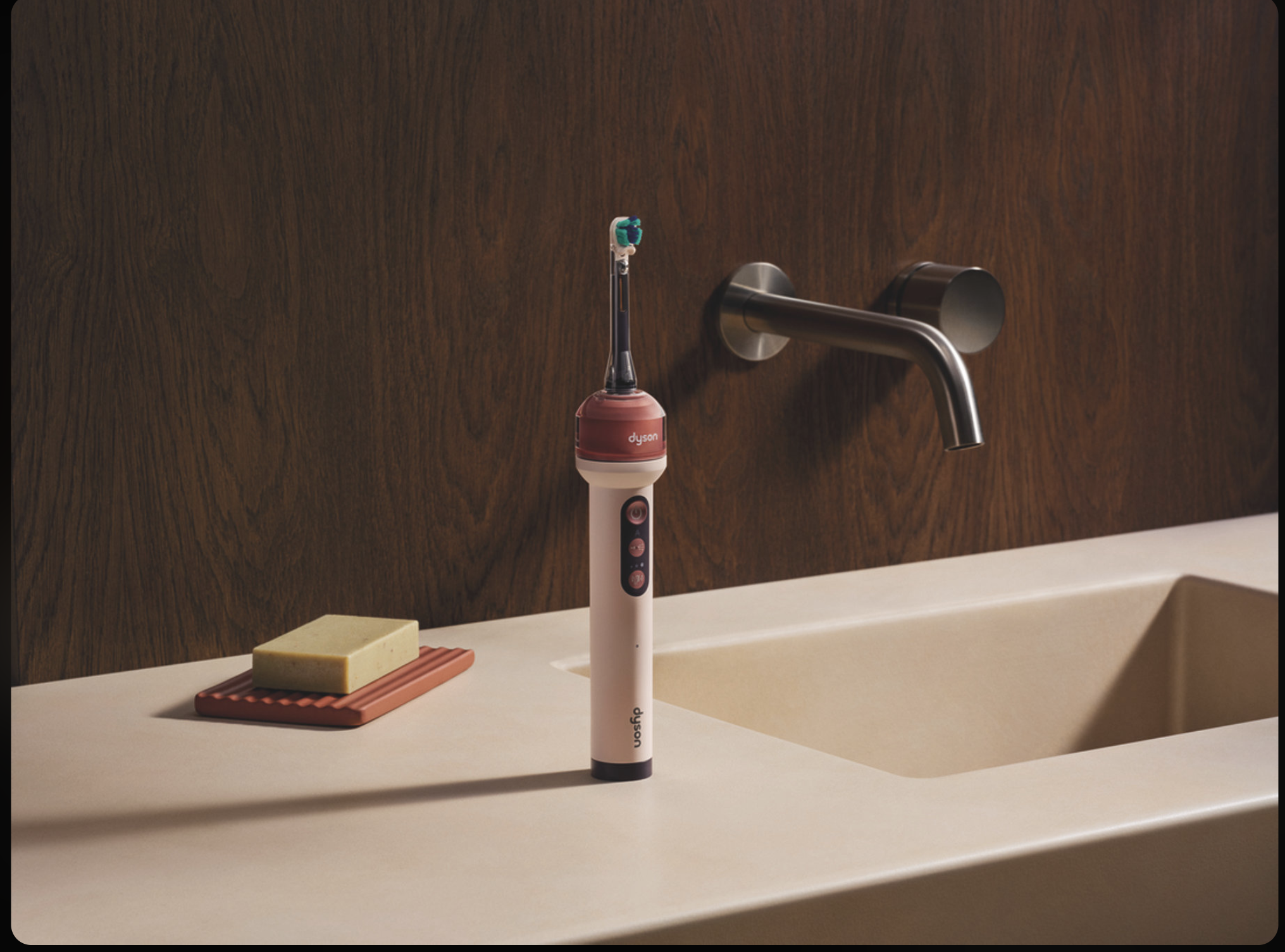
Dyson has spent decades reengineering vacuums, fans, and hair dryers by obsessing over airflow and motors. Now the company is turning that same engineering mindset toward something much smaller: your mouth. Unveiled in Paris and launched this week, the Dyson CameraJet is being billed as the first electric toothbrush with a built-in camera — and it’s priced at $499.
The core idea: see the gaps, then clean them
Most electric toothbrushes clean blindly. They spin or vibrate against your teeth and hope for the best, especially in the tight interdental gaps where plaque tends to build up. Dyson’s pitch is that you can’t reliably clean what you can’t see.
The CameraJet tackles this with a 100,000-pixel macro lens embedded in the brush head, paired with a system Dyson calls Gap Optical Targeting. The camera captures 28 images per second while you brush, and an onboard AI model analyzes that feed in real time to identify gaps between teeth. When it finds one, it can trigger a response in as little as 100 milliseconds.
The jet: precision flossing built into brushing
That response is a conical liquid jet — a fine, targeted burst of mouthrinse fired directly into the identified gap. Unlike the narrow, high-pressure stream of a traditional water flosser, Dyson designed this jet to be broader and gentler, dispensing up to 0.15ml of liquid per burst at lower pressure. The goal is to dislodge plaque between teeth without irritating gums, effectively flossing while you brush rather than as a separate step.
Behind that jet sits what Dyson calls an “anti-gravity tank”: a diaphragm-based reservoir designed to avoid air pockets, so the flossing jet works consistently no matter what angle you’re holding the brush at. A small 12.5ml reservoir holds the mouthrinse, and the included dock can refill it in about three seconds.
Still a serious brushing tool
The camera and jet get the headlines, but the CameraJet is also a sonic toothbrush in its own right:
A motor that oscillates 245 times per second Variable sonic oscillation, which Dyson says keeps bristles moving instead of stalling against tooth surfaces, removing up to 69% more plaque than competing premium sonic brushes in lab testing A dual-bristle brush head, contoured to reach the gumline and marketed to help lift surface stains A silicone-backed “sonic dampener” for a softer feel during use Three brushing intensities: Gentle, Variable, and Deep clean RFID in the brush head, so the toothbrush can tell you when it’s time to replace it Connected cleaning through the MyDyson app
The CameraJet pairs with Dyson’s companion app for a few features that go beyond the brush itself:
Live viewing — watch real-time footage from the in-brush camera as you clean Guided cleaning — in-app prompts that nudge you to cover missed areas or ease up on pressure Coverage mapping — a session summary showing brushing duration and a left/right coverage map, plus alerts for things like overpressure or overscrubbing Dyson is emphasizing that image data is processed and discarded quickly — the company states images are deleted from the app immediately after viewing, not stored or shared, which is likely to be a point of interest for anyone hesitant about an internet-connected camera near their mouth.
Design, colors, and what’s in the box
The CameraJet ships in two finishes — Ceramic Pink and Ceramic Ultra Blue — and comes with a 3-in-1 dock that charges, stores, and refills the device, plus a travel case, two dual-bristle brush heads, and a waterproof USB-C to Pogo-pin charging cable. The battery is swappable, which is a notable choice for a premium electronic device where batteries are often sealed in and non-replaceable.
The price question
At $499, the CameraJet lands well above typical premium electric toothbrushes, most of which sit in the $150–$300 range even at the high end. Dyson is framing this as a genuinely new product category — camera, AI, and water flosser combined into one device — rather than an incremental upgrade to a sonic toothbrush. Whether that combination justifies the price will likely come down to how well the gap-detection and jetting actually perform outside of Dyson’s own lab and clinical testing, and how much daily value people find in the coverage-mapping and live-viewing features once the novelty wears off.
The bigger picture
The CameraJet fits a pattern in Dyson’s product strategy: take a familiar, unglamorous household object, add a sensor and a purpose-built engineering solution, and charge a premium for the result — the same playbook it has used with vacuums, fans, and hair tools. Oral care is a new category for the company, and the CameraJet is a clear signal that Dyson sees an opening in a market still largely built around simple vibration and timers, rather than sensing and feedback.
Read next
The Golden Visa Effect: Why Long-Term Residency Is Changing How People Plan Their Lives in Dubai
The UAE's Golden Visa gives qualifying residents a renewable 5- to 10-year residency that isn't tied to an employer, letting professionals, investors, and families plan homes, careers, and schooling years in advance instead of around a visa-renewal clock. Here's how the program works and who it tends to benefit most.
Why So Many Professionals Move to Dubai to Build Wealth, Not Just a Career
Dubai's lack of personal income tax on salaries means take-home pay goes further from day one, and over a few years that gap compounds into real savings and investment progress. Here's what that actually means for a household budget, and the caveats worth knowing before you move.
One City, Six Economies: Why Dubai's Job Market Isn't Just One Thing
Dubai's economy isn't just tourism or oil — it's a stack of distinct industries, from the Jebel Ali trade hub and DIFC finance district to gold, real estate, hospitality and a fast-growing tech scene. Here's why that mix matters more for your career than any single sector does.
From Idea to License: Why Dubai Has Become a Launchpad for Freelancers and First-Time Founders
Beyond salaries and visas, Dubai has quietly made starting a business or going freelance one of the easiest parts of relocating here. Dozens of free zones, freelance permits, and a reformed mainland ownership law mean more people are turning side ideas into real income streams.