The Museum of the Future: Inside Dubai's Boldest Architectural Statement
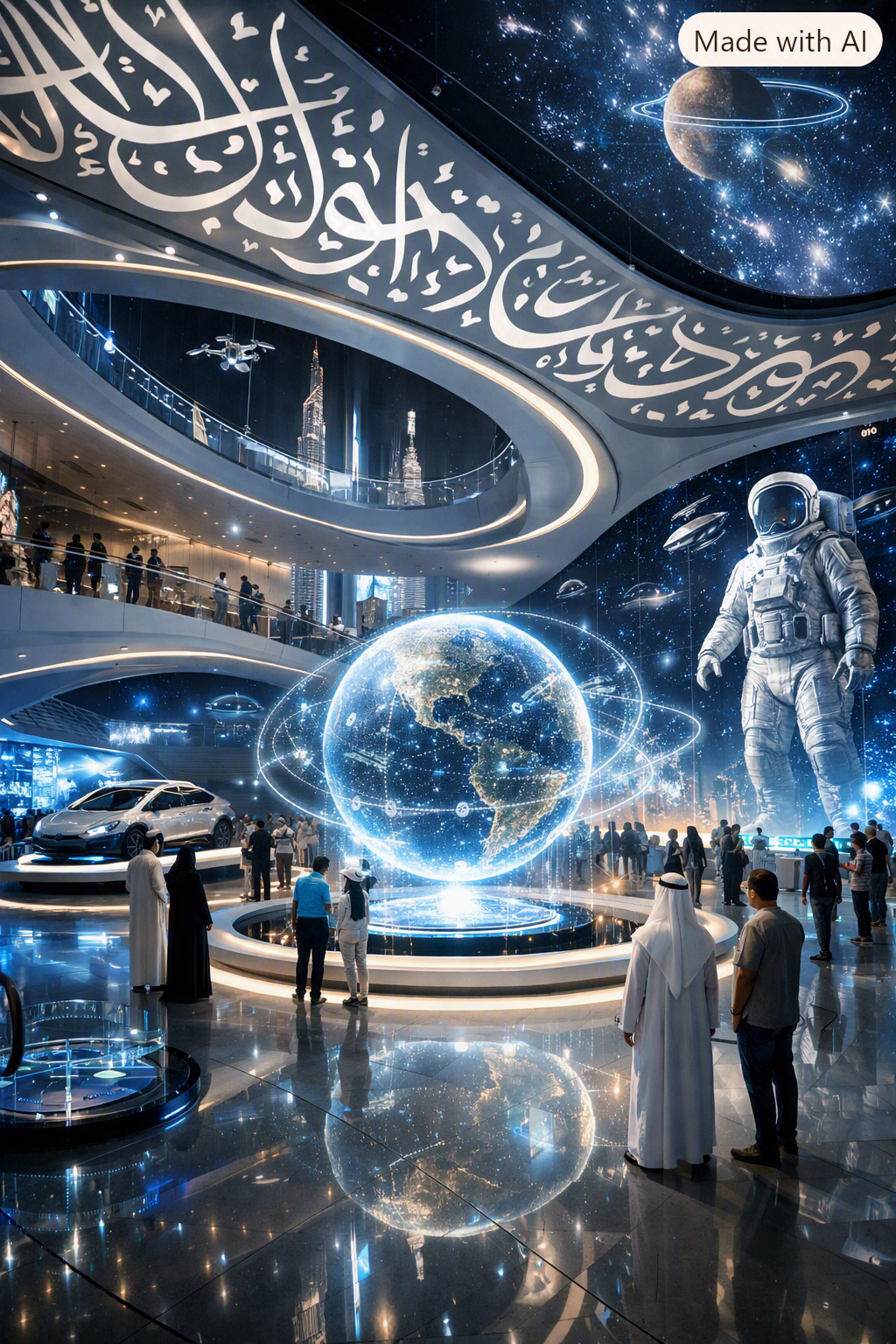
🌀 1. A Building Shaped Like Nothing Else on the Skyline The Museum of the Future is instantly recognizable — a silver torus, a donut-shaped structure, rising above Sheikh Zayed Road with no visible right angles. It doesn't look like a museum, a government building, or a mall, and that's entirely the point. The shape itself was designed to signal that what's inside is meant to feel like nothing that came before it.
✍️ 2. A Facade Written in Arabic Calligraphy The building's exterior is covered in flowing Arabic calligraphy, carved directly into the metal skin rather than applied as decoration. The text is drawn from quotes and poetry about the future by Sheikh Mohammed bin Rashid Al Maktoum, woven into the structure itself. It's a rare example of a building using language as architecture — the words are structural facade, not signage bolted onto it.
🏗️ 3. An Engineering Problem Before It Was an Architectural Icon A seamless torus with no straight lines and no internal columns is a genuinely difficult thing to build — there's no repeating grid to simplify construction. Every panel of the exterior had to be individually shaped to fit the building's continuous curve, calligraphy and all. The empty core at the center of the torus — the "void" — was as much an engineering achievement as the visible structure around it.
🔭 4. Built to Showcase Innovation, Not Just House It Inside, the museum is designed as a showcase for emerging technology and future-facing ideas — from space and energy to health and cities. It functions less like a traditional museum with static exhibits and more like an experience built around what's coming next. That mission matches the building's own symbolism: a structure that looks like it was designed for a future that hasn't fully arrived yet.
🌳 5. A Landmark Placed Deliberately in the Middle of the City The museum sits on Sheikh Zayed Road, one of Dubai's busiest and most visible corridors, surrounded by a public park rather than tucked away. That placement was intentional — a building meant to represent the future had to be seen, not hidden behind other towers. It's become one of the most photographed structures in Dubai within a few short years of opening.
🌍 6. Why It Still Matters The Museum of the Future is one of the clearest examples of Dubai using architecture itself to make a statement, not just to house a function. It took an enormous engineering risk — a shape and facade that had never been attempted at this scale — and turned it into one of the city's most recognizable landmarks. For a city built on ambitious symbols, it may be the most literal one yet: a building whose entire purpose is to represent what's still ahead.
Read next
The Golden Visa Effect: Why Long-Term Residency Is Changing How People Plan Their Lives in Dubai
The UAE's Golden Visa gives qualifying residents a renewable 5- to 10-year residency that isn't tied to an employer, letting professionals, investors, and families plan homes, careers, and schooling years in advance instead of around a visa-renewal clock. Here's how the program works and who it tends to benefit most.
Why So Many Professionals Move to Dubai to Build Wealth, Not Just a Career
Dubai's lack of personal income tax on salaries means take-home pay goes further from day one, and over a few years that gap compounds into real savings and investment progress. Here's what that actually means for a household budget, and the caveats worth knowing before you move.
One City, Six Economies: Why Dubai's Job Market Isn't Just One Thing
Dubai's economy isn't just tourism or oil — it's a stack of distinct industries, from the Jebel Ali trade hub and DIFC finance district to gold, real estate, hospitality and a fast-growing tech scene. Here's why that mix matters more for your career than any single sector does.
From Idea to License: Why Dubai Has Become a Launchpad for Freelancers and First-Time Founders
Beyond salaries and visas, Dubai has quietly made starting a business or going freelance one of the easiest parts of relocating here. Dozens of free zones, freelance permits, and a reformed mainland ownership law mean more people are turning side ideas into real income streams.